WordPress website development for a pharmacists' association: 600 consistent member profiles
How I helped a pharmacists' association move to one consistent WordPress and Elementor platform by entering and formatting 600 member profile pages to the same standard.
Some website projects are about a clever idea. Others are about doing one thing six hundred times without letting the quality slip. This project was the second kind, and it is a good example of the unglamorous work that decides whether a website actually feels finished.
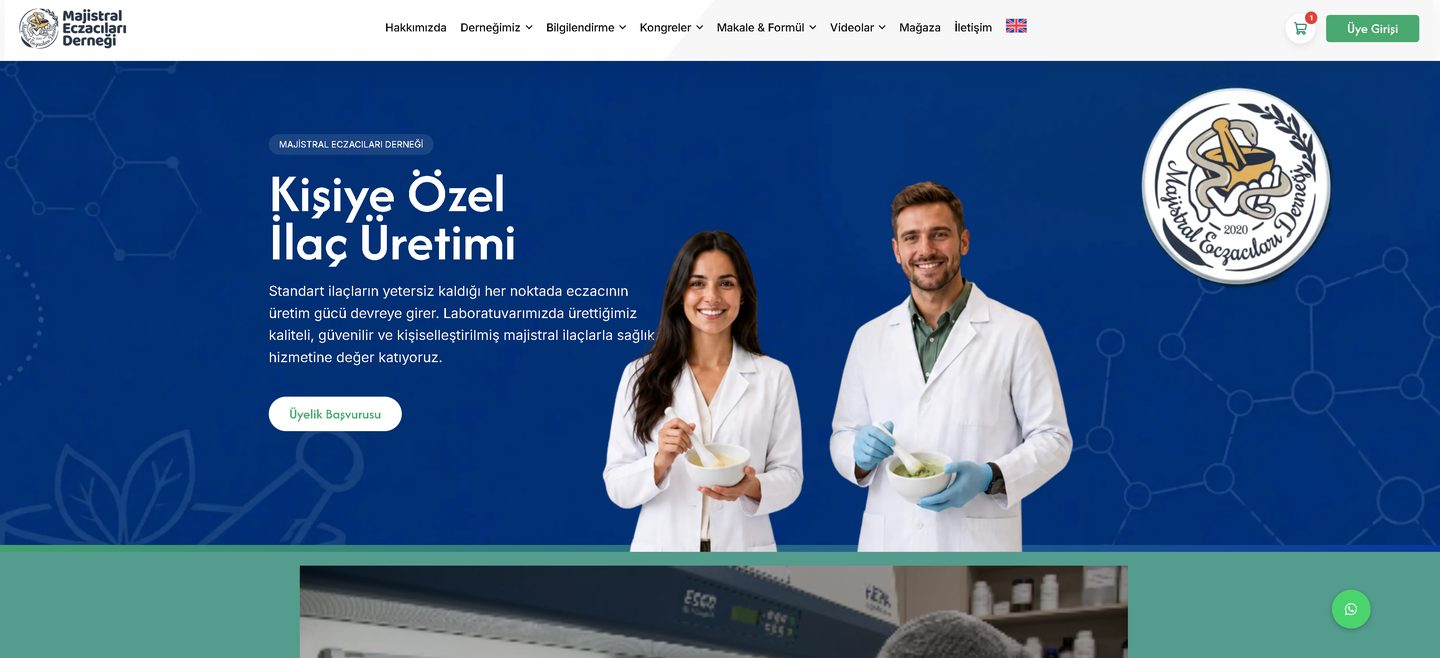
I worked on it as part of the team at Episto. The website was built in WordPress with Elementor for a pharmacists’ association, and my part was the member profiles and the supporting pages around them.
The problem: many members, no single standard
An association lives through its members. For visitors, the member profiles are often the most useful part of the site. For the association, they are the proof that it represents a real, active community. The association needed a unified, consistent digital platform for all of those members.
The difficulty with member information is that it rarely arrives in the same shape twice. Some profiles are long, some are short, some have details that others do not. Put that straight onto a website and every page looks slightly different. Visitors notice, even if they cannot say what is wrong, and the site starts to feel unreliable.
What I did: 600 profiles, one layout
I handled the content entry and formatting for 600 individual member profile pages, so that every one of them follows the same standardized layout. The same fields in the same order, the same headings and the same spacing, whether a profile holds a few lines or a lot of detail.
Next to the profiles I helped build and structure other supporting pages across the website, so the profiles sit inside a site that explains the association and guides visitors to what they need.
Why consistency matters for search, not just for looks
Consistency is usually treated as a design topic. It is just as much a search topic, for three reasons.
First, search engines learn a site’s patterns. When hundreds of pages share one clear structure, with the name in the same heading and the details in the same place, crawlers can read them reliably. Inconsistent pages are harder to interpret and easier to misread.
Second, a consistent structure is what makes structured data possible at scale. Once every profile has the same fields, you can describe each one with the same schema.org markup and be confident it is accurate everywhere, instead of hand-checking six hundred exceptions.
Third, visitors behave differently on a site that feels coherent. They click to a second profile, and a third. That kind of engagement is exactly what a directory is for.
Lessons for any directory-style website
Many businesses in Belgium run something that works like a directory without calling it one: a list of locations, a team page with dozens of people, a product catalogue or a portfolio of projects. The same principles apply.
Illustration: a website plan works best when structure and templates are agreed before content goes in.
Decide the template before the content
Agree on the fields, their order and how empty fields are handled before the first entry goes in. Changing the template after six hundred entries is far more expensive than getting it right after one.
Use the builder’s structure, not manual styling
In WordPress and Elementor, consistency comes from reusable templates and shared styles, not from formatting each page by hand. Hand-formatting looks fine on day one and drifts by page fifty.
Check a sample, then check again
With repetitive content, errors repeat too. Checking a random sample of pages against the template catches patterns early, before they have spread across the whole site.
Illustration: consistency comes from shared templates and styles, not from formatting each page by hand.
The Belgian twist: one structure, several languages
In Belgium the consistency problem often doubles or triples, because the same site runs in Dutch, French and sometimes English or German. Every language version needs the same structure, or visitors and search engines get a different site depending on the language they land in. A template that is agreed once and reused in every language is the only practical way to keep that under control.
It also matters for search. Each language version should have its own properly translated titles and descriptions, and the versions should be linked to each other so Google shows the right one to the right visitor. That is much easier to get right when every page already follows the same pattern.
WordPress website development with the details done
This is the side of WordPress website development that rarely makes it into a portfolio, because it does not produce a dramatic before-and-after screenshot. It is also what separates a site that looks finished in a demo from one that is finished for its users.
I bring the same attention to the WordPress and Elementor sites I build and fix for businesses around Antwerp and across Belgium: a clear structure first, content that follows it, and markup that describes it. If your site has grown page by page and no longer feels consistent, that is usually the first thing I would look at in a free site check.
Team work at Episto: keyword-targeted blog content and on-page SEO for an e-commerce brand and a consultancy, and how I approach SEO content writing so articles match what customers actually search.
As Web and SEO Specialist at Knowledge Experts (2024 to 2026) I supported the team building SharePoint digital workplace sites for SOK Market and Aras Kargo, and learned why findability matters inside a company as much as on Google.