SEO content writing and on-page SEO: blog content that targets what customers search
Keyword-targeted blog content and on-page SEO for proteinbox.com.tr, an e-commerce brand for sports meals, and etkendanismanlik.com, an environmental consultancy, written as part of the Episto team.
Blog content is where many small businesses start with SEO, and where many of them stop, because the articles do not seem to do anything. Usually the problem is not the writing. It is that the articles answer questions nobody is searching for, or answer the right question on a page that search engines cannot read properly.
As part of the team at Episto, I wrote keyword-targeted blog content and worked on on-page SEO for two very different sites. The sites themselves were built and run by the team; the screenshot on this page shows their work, not mine alone.
Two different businesses, one shared problem
ProteinBox (proteinbox.com.tr) sells fresh, macro-calculated meals for athletes and people who train, delivered to the door. Etken (etkendanismanlik.com) is an Istanbul-based environmental consultancy, active since 1990, that helps companies with permits, environmental impact reports, zero-waste certification and similar obligations.
One sells food to consumers, the other sells expertise to companies. Both needed the same thing from their blogs: content aimed at the terms their customers actually search for, so the articles bring in people who are looking for what the business offers.
How I approach SEO content writing
Start from the search, not the topic
An article idea is only useful if people search for it. Keyword research turns a vague topic, such as healthy eating or environmental permits, into specific questions people type or ask, in the words they use. For a meal-delivery brand that might be a question about protein after training. For a consultancy it might be what a particular permit involves and who needs one.
Match the intent behind the keyword
The same words can mean different things. Someone searching for a calorie calculator wants a tool, not an essay. Someone searching for what an environmental impact report is wants a clear explanation first. Writing for the intent, not just the keyword, is what keeps a visitor on the page.
Answer early and clearly
Good SEO content puts the answer near the top, in plain language, and then adds depth. That helps readers, and it is exactly the kind of passage search engines and AI answers like to quote.
On-page SEO: making the content readable for machines
Writing is half the work. The other half is on-page SEO: making sure each article is set up so search engines understand it. On these projects that meant the basics done carefully.
A title that contains the main search term and makes sense to a person. A meta description that summarises the article honestly. One clear H1, followed by H2 and H3 subheadings that follow the logic of the article. Descriptive alt text on images. Internal links from the article to the relevant product or service page, so the content does more than sit in a blog archive.
None of these steps is complicated. They are easy to skip, though, and skipping them is often why good articles never get found.
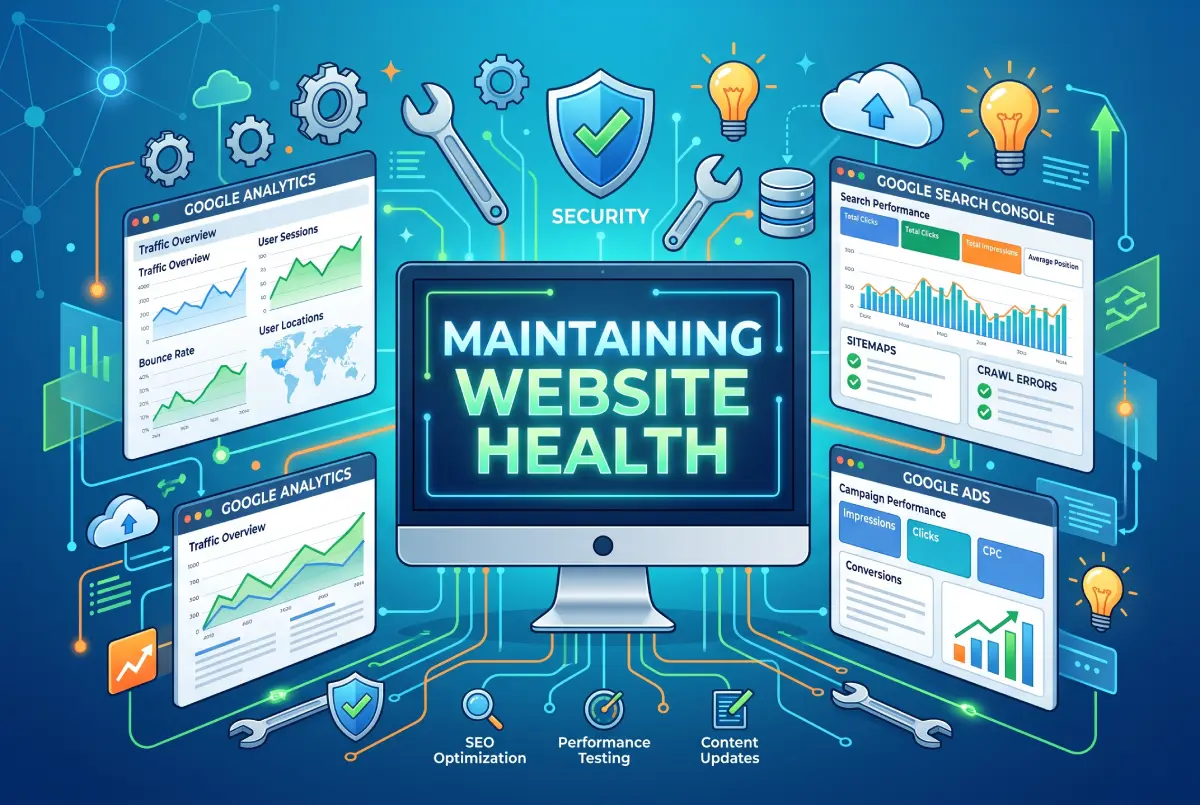
Illustration: Search Console and Analytics show which articles actually bring in visitors.
What I would not claim
I do not have ranking or traffic figures from these sites that I can share publicly, so I am not going to invent them. What I can say is what the work involved and how I approach it. When I work directly with a client, I report from Search Console and Analytics, so you can check for yourself which articles bring in visitors and which do not.
A checklist for your next blog post
Before you publish, run through the same questions I use. Is there a search term behind this article, and do real people use it? Does the title contain that term and still read naturally? Is the answer to the main question in the first few paragraphs? Is there exactly one H1, with subheadings that follow the order of the argument? Do the images have alt text that describes what they show? Does the article link to at least one page where the reader can take the next step? And does the meta description tell a searcher, in about 150 characters, why this page is worth the click?
If you can answer yes to all of them, the article has a fair chance. If not, fixing the gaps is usually quicker than writing something new.
Applying this to a business in Belgium
The same method works in Dutch, English or Turkish, and for a local business in Antwerp as much as for a national e-commerce brand. Start with what your customers search for, write the clearest answer on the web, set the page up so machines can read it, and link it to the page where you actually sell.
If you already have a blog that does not bring in visitors, a free site check is a good place to start. I will look at which topics your articles target, whether people search for them, and what I would change first.
As Web and SEO Specialist at Knowledge Experts (2024 to 2026) I supported the team building SharePoint digital workplace sites for SOK Market and Aras Kargo, and learned why findability matters inside a company as much as on Google.
PupSmart is my own Android app on Google Play for tracking a dog's potty, meals, sleep and training, with AI-assisted features. What shipping a product end to end taught me about building websites that work.